Read time: 6 mins
Training for a marathon is demanding. But when an injury doesn’t settle, it becomes more than just a setback. It becomes an uncertainty.
That was where James Hind found himself ahead of the London Marathon.
After being forced to withdraw in 2025 due to injury, 2026 wasn’t just another attempt. It was likely his last realistic opportunity to take part.
When everything stopped
In 2025, James was in strong form. Training was going well, and he was feeling confident heading into the London Marathon.
Then a sprained ankle brought everything to a halt.
After weeks of preparation, he had to withdraw:
“It’s official, I’ve had to sadly pull out of running the 2025 London Marathon due to injury…”
Deferring gave him another chance in 2026, but it also raised the stakes. Another setback wouldn’t just mean missing a race – it could mean losing the opportunity altogether.
A problem that wouldn’t resolve
Like many runners, James didn’t come straight to me, he had already tried to fix the issue.
Over time, he had seen multiple sports rehabilitation professionals and followed different treatment approaches. Some gave short-term relief, but the problem never fully settled. Each time training intensity increased, the pain returned.
This is where many runners get stuck. Not through lack of effort, but because the underlying issue hasn’t been clearly identified and managed.

A clear diagnosis changed everything
When James came to me, the focus wasn’t just on more treatment, it was understanding why the problem hadn’t improved. Following assessment and imaging, an MRI scan confirmed the issue as peroneal tendinopathy. This was the turning point.
Because once the underlying problem was clearly identified, the approach could shift away from generic or short-term fixes to something more targeted and structured.
His treatment plan combined:
- Acupuncture to reduce pain and support recovery
- Targeted sports therapy to improve load and movement through the ankle
- Structured rehabilitation exercises to rebuild strength and stability
Rather than trying multiple disconnected treatments, everything worked together.
James attended four sessions over three months, alongside consistently following his rehab plan.
As Sarah explains:
“Tendinopathy issues can be stubborn, especially when they haven’t been fully resolved the first time. In this case, combining acupuncture with targeted rehab allowed us to reduce pain, rebuild confidence in movement and get him back to training properly.”
Rebuilding trust in the body
As the weeks progressed, the pain began to settle, but more importantly, confidence returned.
That’s often the real barrier with persistent injuries. Not just whether the pain is there, but whether you trust your body to hold up when it matters.
With a structured return to training, James was able to rebuild his mileage steadily, without the setbacks he had previously experienced.
In the final stages of preparation, treatment also focused on maintaining overall leg health and addressing any smaller issues early on.
Back where he wanted to be
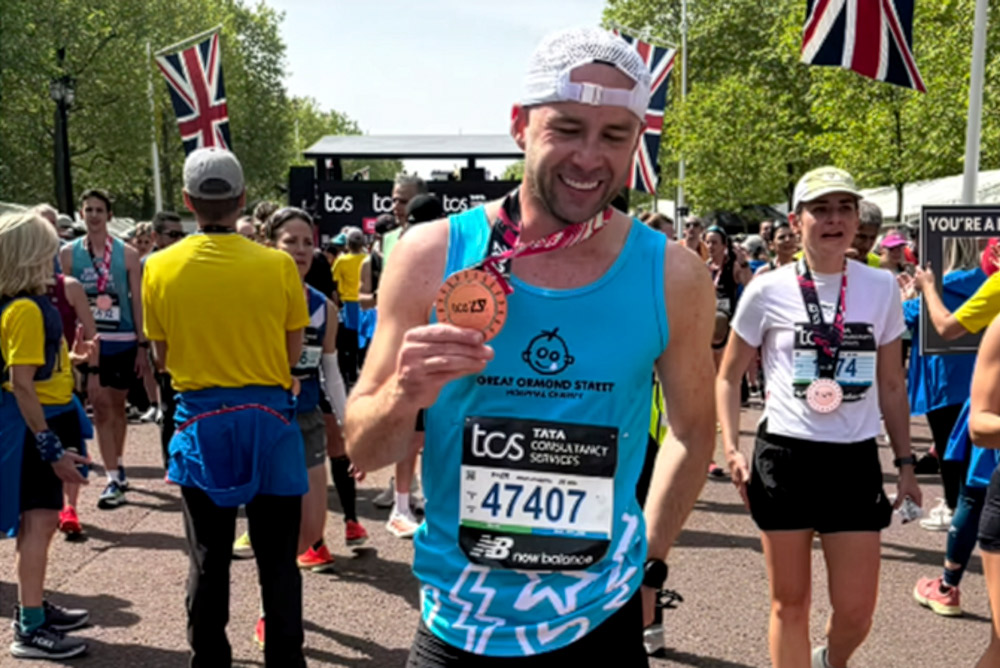
In April 2026, James stood on the start line of the London Marathon. A year earlier, he hadn’t been able to start. This time, he finished.
He completed the race in 3 hours 20 minutes, running in support of Great Ormond Street Hospital.
Reflecting on the day, he said:
“A day that will live long in the memory… I couldn’t be more proud to add my name to the long list of London Marathon finishers.”
Just as importantly, the issue that had held him back was no longer a factor:
“My ankle felt strong, no issues at all and I haven’t had any for a while now.”
Supporting a great cause
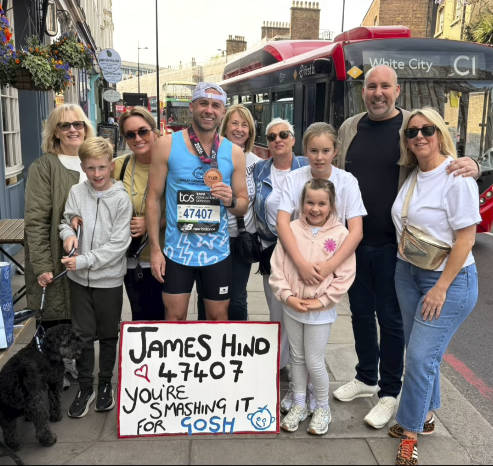
James ran the London Marathon to raise money for Great Ormond Street Hospital. If you’d like to support his efforts, you can donate here.
You can also follow his running journey on Instagram.
What this means for other runners
Persistent injuries such as ankle pain, achilles issues, or tendon problems can feel like they never fully resolve. Often, it’s not about doing more. It’s about doing the right things, in the right order, based on a clear diagnosis.
James’ experience shows how a more focused and structured approach can allow you to recover properly, rebuild confidence, and return to training without ongoing setbacks.
Need help with a running injury?
At SLS Therapy, I work with runners dealing with injuries that haven’t settled through previous treatment.
If you’re experiencing ankle pain, tendon issues, or recurring problems when training – the first step is understanding what’s actually causing it.
From there, we can build a clear plan together to get you back to running with confidence.
Book an appointment today and get back to doing what you enjoy.