Read time: 7 mins
If you’ve ever pushed through a training block feeling utterly wiped out, picked up a niggling injury that seemed to come from nowhere, or noticed that your body responds completely differently from one week to the next – you’re not imagining it. And you’re definitely not alone.
For decades, the advice women received about exercise and training was largely based on research carried out on men. The programmes, the recovery guidance, the injury prevention strategies – most of it was built around a body that doesn’t experience the same monthly hormonal fluctuations, the same perimenopausal transition, or the same post-menopausal shift in bone density and muscle mass that women navigate across their lifetimes.
The good news? That’s changing. In 2026, one of the most talked-about shifts in the UK wellness world is the move towards female-first fitness – training that actually takes your biology into account rather than working against it. And as a therapist who works with women at all stages of life, this feels like a very long time coming.
Your Hormones Are Doing a Lot of Heavy Lifting
Let’s start with the basics. Throughout your menstrual cycle, your oestrogen and progesterone levels rise and fall in a fairly predictable pattern – and those fluctuations have a direct effect on how your body feels, how it recovers, and how injury-prone it may be at any given time.
Research has shown that oestrogen levels affect ligament laxity – essentially, how loose or flexible your ligaments are. This is particularly relevant around the knee. Studies suggest that women are two to four times more likely to sustain an anterior cruciate ligament (ACL) injury than men, and while there are multiple contributing factors (including anatomy and biomechanics), hormonal fluctuations are increasingly recognised as part of that picture.
It’s worth noting that the science here is still evolving – some studies show a clear link between certain phases of the menstrual cycle and increased injury risk, while others suggest the relationship is more complex and individual. What we can say with confidence is that your hormonal cycle influences your body in ways that matter for training – and that understanding this is far more useful than ignoring it.
Practically speaking, this might mean you feel stronger and more energised in the first half of your cycle (the follicular phase), and notice more fatigue, aches, or a dip in performance in the days before your period arrives. Neither of these experiences is a sign that something is wrong. Your body is simply doing what it’s designed to do – and your training plan can reflect that.
The Perimenopause and Menopause Piece
For women approaching or going through perimenopause and menopause – which typically begins in the mid-to-late 40s and can last several years – the hormonal picture becomes even more significant.
As oestrogen levels decline, the effects on the musculoskeletal system can be quite pronounced. Oestrogen is a powerful anti-inflammatory hormone that plays a key role in maintaining both bone density and muscle mass. When levels drop, the impact can include:
Joint pain and stiffness – Low oestrogen increases the rate of joint inflammation, which can cause swelling, pain and reduced range of movement. Many women are surprised to find that joint discomfort is a recognised symptom of perimenopause, not just something that comes with getting older.
Muscle loss – Women can experience a rapid decrease in muscle mass and strength during this transition, which leaves the body more prone to muscle injury and slower to recover from training.
Reduced bone density – Bone density peaks around age 30 and gradually declines thereafter, with a more rapid decrease during perimenopause and menopause. Research suggests women can lose between 15 and 25% of their bone density in the first ten years after menopause – significantly increasing the risk of stress fractures, particularly for women doing high-impact activities like running.
Frozen shoulder – This one catches a lot of women off guard. Frozen shoulder disproportionately affects women aged 40 to 60, and is now increasingly recognised as a musculoskeletal symptom of perimenopause, linked to inflammation of the shoulder joint lining. If you’ve been quietly suffering with a stiff or painful shoulder, it’s absolutely worth getting properly assessed.
None of this is meant to be alarming. These are normal biological changes – but they do mean that the way you train, recover, and look after your body may need to adapt. And the sooner you understand what’s happening, the better placed you are to stay strong, active, and injury-free.
Why “Pushing Through” Isn’t Always the Answer
Here’s the thing about being an active woman in your 30s, 40s or 50s – most of the time, you’re already brilliant at just getting on with it. You fit training around work, family, life. You push through the tired days. You tell yourself the ache will settle down.
And often it does. But sometimes it doesn’t – and that’s when things start to unravel.
When the body is navigating hormonal changes, the margin between “working hard” and “overloading” narrows. Tendons and ligaments that are more lax, joints that are more inflamed, and muscles that are losing mass more quickly than they’re being rebuilt – these aren’t things that respond well to more volume and more intensity without the right support in place.
The women who tend to do best are the ones who treat recovery as part of their programme – not something bolted on as an afterthought, but a genuine and deliberate part of how they train. That means prioritising sleep, managing load sensibly across the training week, and – crucially – seeking professional support when something isn’t settling.
How Soft Tissue Therapy and Acupuncture Can Help
This is where treatments like Soft Tissue Therapy and Acupuncture can make a really meaningful difference – and not just for women who are already injured.
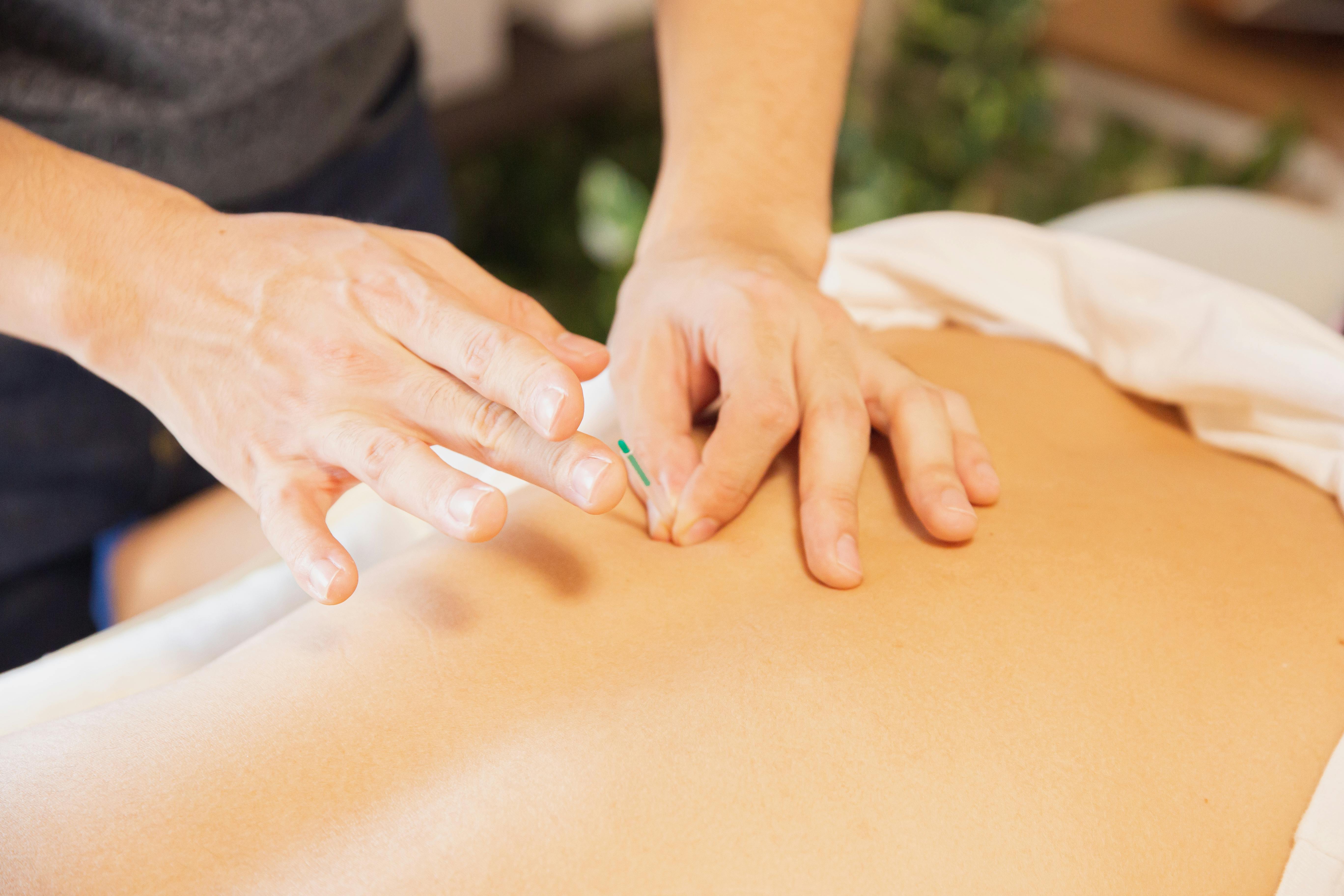
Soft Tissue Therapy works directly with the muscles, tendons, fascia and connective tissues to release tension, reduce inflammation and improve the way your body moves and loads. For women going through perimenopause or menopause, where muscle soreness, joint stiffness and slower recovery are common complaints, regular soft tissue treatment can be genuinely transformative. It can also help identify areas of weakness or tightness before they develop into something more serious.
Acupuncture has a growing evidence base for pain management and is widely used to support women through hormonal transitions. It works by stimulating specific points in the body to encourage natural healing, reduce inflammation and restore balance – and there is good evidence for its effectiveness in managing musculoskeletal pain, joint discomfort, and the kind of chronic, low-level aches that can make training feel like a slog.
The key with both treatments is consistency. A one-off session when things are really bad will help – but building regular treatment into your routine is where the real, lasting benefits come from.
Practical Things You Can Do Right Now
You don’t need to overhaul everything, start here:
Track how you feel across your cycle. Even a simple note in your phone – energy levels, how training felt, any niggles – can reveal patterns that help you train smarter. Some women find they’re stronger and more resilient in certain weeks, and more prone to fatigue or discomfort in others. Work with that, not against it.
Don’t skip strength work. This is especially important for women in their 40s and beyond. Resistance training is one of the most effective ways to counteract muscle loss, protect bone density and reduce injury risk. It doesn’t need to be heavy or complicated – even two sessions a week makes a real difference.
Prioritise recovery as much as training. Sleep, nutrition, and managing your overall load are not optional extras – they’re how your body adapts and rebuilds. If you’re consistently tired, sore, or picking up niggles, that’s worth paying attention to.
Get things assessed early. If something isn’t settling, or keeps coming back every time you increase training, don’t wait. Understanding what’s actually going on is the first step to sorting it properly – as anyone who’s dealt with a persistent injury will tell you.
Talk to a professional who understands female physiology. This feels obvious, but it’s worth saying. Not all training advice or treatment approaches are built with women’s hormonal health in mind. Finding a therapist who understands the full picture makes a real difference.
Final Thoughts
Your hormones influence far more than your mood – they affect how your muscles, tendons, joints and bones respond to training – and how quickly you recover from it. From the monthly fluctuations of the menstrual cycle to the longer-term shifts of perimenopause and menopause, your body’s needs change over time. The most effective approach is one that acknowledges this – training intelligently, recovering properly, and seeking the right support at the right time. Soft Tissue Therapy and Acupuncture are both well-placed to support women through these different stages, whether you’re dealing with an existing injury or simply want to stay on top of things before something goes wrong.
Doing less isn’t always the answer. But doing the right things, at the right time, for your body? That’s where it all starts to come together.
Ready to Train Smarter, Not Harder?
Whether you’re navigating a persistent injury, managing the physical changes that come with perimenopause or menopause, or simply want to feel stronger and more resilient in your training – I’d love to help.
At SLS Therapy, every assessment starts with understanding what’s actually going on for you – not just the symptoms, but the full picture. From there, we build a plan that makes sense for your body, your lifestyle, and your goals.
Book an assessment and begin your journey to wellness.